Journal, Publishing/Editing

Inspiration in So Many Words

I’ll admit it: reading books about writing always makes me feel a *little* like I’m cheating, because when I’m reading them, I *feel* productive, but am not actually getting words on the page, and also because although I’m reading, I’m not taking a chunk out of the massive To-Read list (and by list, I mean stack) I’ve accumulated over the years. It’s so easy to feel like “A Writer” when I read books like these–the same way I feel like “A Writer” when I chat writing with other aspiring authors, sit on convention panels, and/or read blog posts about writing (like this one! OOO! Self-reflective!). None of them get words down on the page, despite all the warm-productivity-fuzzies I get from them.

I’m also extremely picky. There are a million and one books on How To Write out there, and in this realm, all are most decidedly NOT created equal. I typically gravitate toward the ones written by authors whose work I enjoy, because if I hate their stuff, why would I want to listen to their writing advice? (There’s a caveat here, of course: sometimes a writer I might consider terrible might in some strange way be an excellent teacher–they do say you learn as much or more from failure than you do from success, so there you go. Their advice might also be very insightful, even if they can’t put their own advice into practice.)

And it’s also true that just because you like an author’s work doesn’t mean they have any particular skill at *communicating* what they do or how they do it. Take Edith Wharton. Someday, I will force myself to slog through her tiny writing book. I swear I will. I love her books, adore her short fiction, but that writing book is killing me slowly with boredom. I want so badly to understand her approach to her own work, but every time I sit down to try to get through a few more pages, I find myself zoning out or getting sleepy. It may be that the book gets much better as it goes along, but I haven’t gotten to those parts yet. So case in point: Not all great writers are good teachers.

But there have been a handful of books that have really rocked my socks when it comes to putting me on the right track, re-energizing me, and giving me some tools to use when I approach my next story. These are the books I keep close at hand, on the few cherished bookshelf spaces in my roll-top desk, because just having them within eye-shot somehow makes me less shaky when approaching that blank page. Below is my list–and that’s not to say that there aren’t others that are amazing (I may just not have heard of them yet), or that these will impact everyone the same way they impacted me. I’d love to hear from you if you’ve got one you can’t live without that I didn’t mention. I’m always glad to find new wells  of inspiration! :)
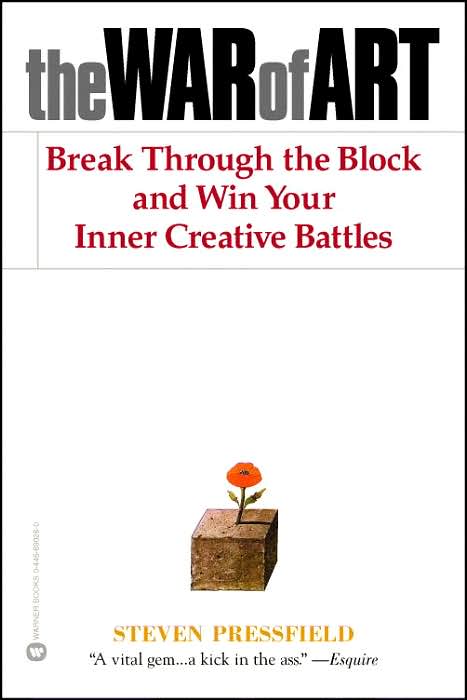
The War of Art Cover#5: The War of Art – Steven Pressfield

This is a book I picked up JUST YESTERDAY and I’m already finished with it. (Granted, it’s short, so I can’t really be all that smug.) I learned about it while reading an interview featuring Esperanza Spalding, and she mentioned she was reading it. It’s a book that is more than applicable to other artistic pursuits beyond writing, but the author himself is very well-established, so it does focus mostly on the authorial pursuit in its concrete examples. That said–I’ll admit, I’m breaking my rule from above–I’ve never actually read any of his books. They’re now on my list (re: stack) of To-Read, because DAMN. If he can be this gripping in non-fiction, I can’t help but want to see what he’s capable of in fiction.

I love the first 2/3 rds (the last third gets a bit overly metaphysical for my taste, but it *is* interesting, just had less impact on me personally). Pressfield is all about the grindstone and putting in your time and your words. Just do it. Fight your own Resistance. Stop whining and sit your butt down. That is the only way a book, a short story, a painting, or a symphony is going to be created. Period. No other way works, because no other way gets anything done. Kafka sat his butt down and wrote. Asimov sat his butt down and wrote. Wharton sat her butt down and wrote. Period. That’s it. That’s all there is to it. Do it, or it’ll never be done. It may seem totally self-evident, but there are just so many ways to procrastinate, to *talk* about doing it, to *read* about doing it, or *blog* about doing it. But at the end of the day, you just gotta do what you’ve gotta do.
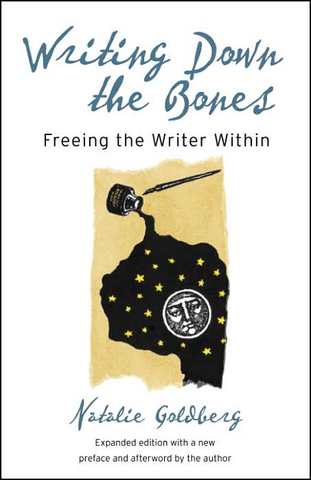
Writing Down the Bones Cover#4: Writing Down the Bones – Natalie Goldberg

I love this book. I LOVE this book. While it may be a bit too Zen for some folks (it’s all about writing from the heart, writing loads and loads and loads without any end-goal in mind, just capture that FEEL, that VERB, that SOUND), it sparks the creativity in me like crazy. One of the things she does is fill a spiral-bound notebook a month with writing. Any kind of writing. She calls it practice writing, just getting used to vomiting your whole soul on the page. Well, for those of you familiar with me, you know Staples is my dealer, and notebooks are my crack. I have dozens of notebooks, some filled, some not. Now that I’m getting back into writing by hand, these notebooks are actually starting to get some wear and tear. The idea of filling one a month with just WHATEVER gets my fingers itching for some college ruled paper, let me tell you!

But what’s more than just that she’s unwittingly supporting my notebook addiction, the chapters in Goldberg’s book are short, thoughtful, and engaging. They make you WANT to write, to just creatively overflow and see what happens. Write and get used to letting things go. As a self-admitted perfectionist, learning to let go is a big one for me. And she’s got some fascinating little exercises in there that just get the mind-grapes going wild with ideas.
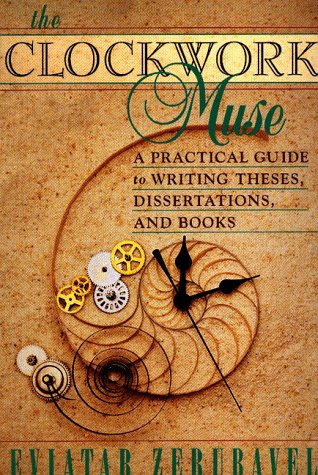
The Clockwork Muse Cover#3: The Clockwork Muse – Eviatar Zerubavel

A tiny book with a big punch. If you’ve ever been overwhelmed by a too-large project without any idea of how to not only wrestle it under control, but finish it in a reasonable time-frame, this is the book for you. I was assigned this book back in college, and subsequently skimmed it and tossed it aside without really paying attention to what it was saying. It’s very non-fiction oriented, but it could work (and has for me) just as well for fictional projects. It’s all about organization, planning, and scoping a project. It shows you how to set up a reasonable (and honest) time-line for how long something will take you to complete, so that ultimately, you’ll be able to determine whether or not you can get X project done and drafted by any given deadline.

It’s a practical guide to getting work done, and I love it. It appeals so much to the little bureaucrat in me that wants create files and labels and track my progress in my day planner. The process Zerubavel outlines in this book may be too rigid for some who like a bit more spontaneity, but for those of us paralyzed by the enormity of a project (like…hmm…a novel?), it’s the greatest comfort. Baby-steps, folks, it’s all about baby-steps. And for people like me who tend to bite off a lot more than they can chew in one go, it’s a good grounding tool, too.
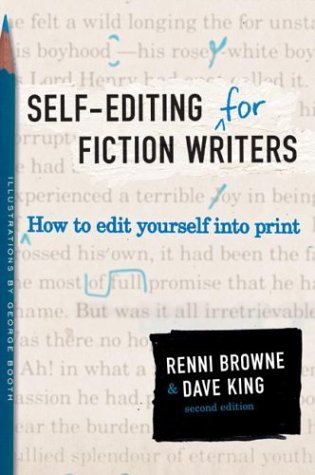
Self-Editing for Fiction Writers Cover#2: Self-Editing for Fiction Writers – Renni Brown & Dave King

If there’s one book that I’ve given to writer friends more than ANY other, it’s this one. Until I read this book, I could not for the life of me fully grasp the “Show Don’t Tell” shtick because so many would-be helpful advice-givers used terrible examples for “telling” verses “showing” and usually overemphasized the “NEVER EVER EVER TELL ANYTHING EVER” bit. Which, of course, is bullshit. You need to tell some things, or your readers are going to get bored to death. I know. I tend toward showing too much. “Lizzy thought she might have to go to the bathroom before they left for their road trip, so she opened her bedroom door, strolled down the hall, turned the bathroom door handle, and […]” You get the picture. Definitely show the important scenes, but don’t over-bloat your story so much that you kill the pacing and lose the reader’s interest. This book taught me–with GOOD examples–how to differentiate those two things, and more importantly, how to look at stories I’d already gotten to rough draft with a critical eye for what needed to be shown verses what would be better skimmed over with a carefully applied “telling” moment.

I cannot praise this book enough. In fact, I think I’m going to start assigning this book to myself as required reading every six-months until I can recite the whole of the text backwards, because I think it’s THAT useful. It has helped me train my eye for evaluating my own work on an objective, editorial level like nothing–short of slush-editing–has ever been able to do for me. It’s big-picture stuff, not grammar or punctuation. Sure, you need to check for those things too, but as far as Brown and King are concerned, those are minor details to be checked before submitting. The big problems are the ones people so often don’t even see, which gets their work canned over and over again. I know. I’ve seen them in the slush pile. Repeatedly. They’re common problems–the kind you have a hard time putting your finger on, and can only really say, “Hmm, I’m not sure what it is, but this story just didn’t work for me.” This helped me vocalize what that mysterious IT is.
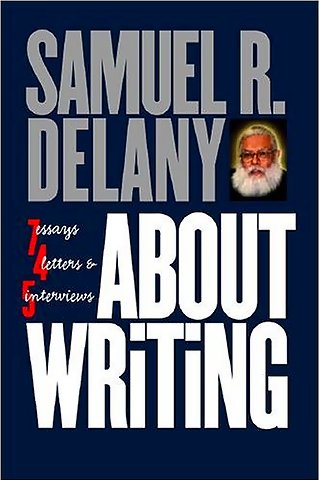
#1: About Writing – Samuel R. Delany

You want to learn about this mythical beast called the creative process? Read Dahlgren. Then read About Writing. Delany is one of the few authors whose book on writing I’ve picked up and immediately shouted (to the horror of my shocked husband), “YES! THIS IS IT! THIS IS HOW I FEEL!” Delany is a freaking genius.

This book scares the crap out of me. I’m not going to lie: some of what he says about talent and writing ability scares me to death because I’m so afraid I don’t have it. But if you can work through that and say–like I did–“Well, too bad! I’m doing it anyway! (and hope I’m not wasting my life–weee!)” then read this book.

This book. I love it. I keep it close at hand. I re-read chapters. The poor thing is getting rather beaten up. His philosophy on art and the creative process is brilliant and has inspired me so much to become a better writer. He’s got high demands for what it takes to do the “author” thing well, but you know what? It’s worth it. So worth it. In this book, he gives me heights to reach for that previously I hadn’t even realized existed up there in the mountain clouds. If you want to read more about my insane OMG LOVE ravings about this book, check out this blog post on the Inner Critic and the Inner Editor, which was originally up on the Apex Magazine blog, or read this post, originally posted here, about what not to do while doing NANOWRIMO.

So there you have it! My Top 5 writing-related books that rock my socks. Do you have some books you adore to pieces? What are they? What did you like about them?

Author Interview, Publishing/Editing, The Zombie Feed

THREE QUESTIONS: Ty Schwamberger

The FieldsLadies and gentlemen, bogarts and ghouls (yes, I went there), today I’ve had the marvelous opportunity to host THREE QUESTIONS with The Zombie Feed’s Editor-in-Chief Ty Schwamberger. Mr. Schwamberger has just come out with his new zombie novella, THE FIELDS. Per the press release:

Billy Fletcher learned to farm the family’s tobacco fields – and beat slaves – by the hands of his father. Now, his father is dead, the slaves have long since been freed, and the once-lush fields are dying. Salvation by the name of Abraham knocks on the farmhouse door, bringing wild ideas. He can help Billy save the plantation and return the fields to their former glory…by raising his father’s slaves from the dead.

Can the resurrected slaves breathe life back into the Fletcher farm? Having brought the slaves back from graves that his father sent them, can Billy be the kind master his father wasn’t? Is keeping the farm worth denying the men the freedom they earned with death?

Billy’s conscience holds the key to those mysteries, but not the biggest one: what does Abraham really want from the former slave owner’s son?

Find out what the reviewers think by heading over to Ty Schwamberger’s blog, and pick up your copy of the novella either in paperback or e-book format!

1. The Writing Question: What published story of yours was the most difficult to write, or the most difficult to sell?

I’ll start by saying this: I’ve been extremely fortunate and lucky – fortunate, because for whatever reason I’ve always been good at “pitching” projects to prospective publishers, and lucky, well, I think everyone needs a bit of luck at one time or another in this business. Some people don’t believe this when I tell them, especially with 4 books, 1 short film, and several short stories and articles already out there, but I didn’t start writing until early 2008. In fact, the first two “horror” authors I read that got me into writing were Jack Ketchum and (this won’t surprise a lot of folks) Richard Laymon. After those two novels, I just sat down, not knowing what the hell I was doing, and started pounding away at the keyboard. Three months and 100,000 (awful) words later my first novel was finished (and subsequently published, but I don’t talk about that one). After that, I just kept going. After THE FIELDS, there will be 6 additional books (novellas, a collection, anthologies I’m Editor on), a few short stories and 1 feature-length film that is currently in pre-production (there’s a few additional things in the works, but I can’t talk about them quite yet). And that’s all before the end of 2012. So, you can see, I really pushed myself in the beginning. Hell, I still do. Ok, that was a long ramble to one part of the question… In short, I don’t think I’d classify any one book as a “difficult” sell to a publisher. The publishing world is generally a slow-moving machine. That’s just the way it is. You have to keep forging ahead, blazing new trails, and never, ever, give up.

As for THE FIELDS… Jason Sizemore (owner of Apex Publications) and I met a few years ago at a convention. I quickly grew to love the catalog of quality books he was putting out, and ever since I have been trying to pitch something to him. Before writing THE FIELDS, I had always enjoyed zombie movies and books, but I didn’t want to just rehash the same stuff that’s already been put out there a ton of times. I wanted something different. Unique. Something that’s never been done before. So, it was around this time last year that I came up with the idea to write a zombie story, but place the “characters” in the middle 1800s. The middle 1800s, you ask? Yup, you got it. What could be more exciting than former slaves rising from the dead hellbent on getting back at the same people that made their lives a living hell. BUT, I didn’t want the story to be just about revenge. Oh no. I wanted something deeper. A lot deeper. I think Jonathan Maberry, whom wrote the introduction to the novella said it best: “It’s part horror story in the classic sense – misdeeds from the past coming back to haunt the present. It’s part zombie story.  It’s part adventure. And it’s part social satire in its darkest sense. The Fields is a morality tale.  With zombies.

I’m extremely excited that it’s finally seeing the light of day…and I think folks are going to be pleasantly surprised they’ll get a lot more out of the book than just brain munching fun!

2. The Horror Question: Blood and gore: scary or not scary?

It depends. Is it integral to the story? Or is the writer just going for the gross out factor? Personally, I enjoy (if “enjoy” is the right word to use) a little slice n’ dice. But, again, it all depends on the plot. Back in the horror hay day of the 1980s, slasher films were almost always putting three common elements into each movie: action, gore and sex. When I first started writing (specifically, my first novel), that’s pretty much all there was. Well, that, and perhaps a little plot on the side. But, growing as a writer over the years, I’ve learned more about the business, what does and doesn’t sell, and subsequently toned down the sexual content in my stories (unless I’m contracted to write about it, of course…then money talks and bull–)…

Anyway. Back to gore…

For instance, THE FIELDS, has very little gore. Yes, there is some (you can’t write about zombies without mentioning their rotting skin or need for eating the living, right?), but not very much. As I mentioned before, I wanted THE FIELDS to be different. Very different. I wanted the reader to get more out of it than the brain-blasting, undead fun many of us enjoy. I think THE FIELDS is very scary, because the “zombies” in the story represent something a helluva lot worse than an ambling horde coming after you. It talks about racism, a young man’s love and respect for his father – even though he knows his father was wrong for treating the slaves like he did – and just how much one is willing to sacrifice themselves for the greater good of man.

3. The Oddball Question: Barring family photo albums, religious books, cookbooks, etc.: If you could save only one book from your house because a blob monster was about to absorb it into its massive jelly-like girth, what book would you grab?

“The Bible” aka A Writer’s Tale by Richard Laymon. I’m fortunate enough to own a copy, and would throw a tray-full of ice cubes at a blob monster to slow it down long enough, so I could run and grab the book. EVERY aspiring author should do whatever they can to find a copy and give it a read. But, don’t ask to borrow mine, or you might just get bitch slapped.

#

Ty Schwamberger is a growing force within the horror genre.  He is the author of a novel, multiple novellas, collections and editor on several anthologies.  In addition, he’s had many short stories published online and in print.  Two stories, ‘Cake Batter’ (released in 2010) and ‘House Call’ (currently in pre-production in 2011), have been optioned for film adaptation.  You can learn more at:  http://tyschwamberger.com.

Apex Magazine, Publishing/Editing, Writing

Slush Lessons: What I’ve Learned About Writing From Slush Editing

(This was originally posted on the Apex Magazine blog in 2009.)

Just like every other writer out there, I’m always on the look out for things that will improve my fiction. Whether it be advice in a writer’s magazine, inspiring tips in a how-to-write book by a favorite author, or a variety of websites, critique groups, or outside inspiration, there is always something new to learn. Slushing, however, is one of the best sources for insight into improvement.

All authors seem to make similar mistakes, and I’m no exception—I see myself rejecting stories for things I know I have in my own fiction. That’s why I began making this list, and why I’m sharing it with you.

1. If it’s Science Fiction or Fantasy, does it have some hint of that in the first  page or two?  Time and time again, I see stories in which the speculative element doesn’t appear until more than half-way through the story. In almost all of the stories I’ve seen pass through our ranks to the second or third reading, you know almost immediately it’s SF/F/Horror. It doesn’t have to be blunt: even a subtle foreshadowing or the perspective of the POV character can insinuate that this is sf/f/h before you have so much as mention an alien, a dragon, or a deranged serial killer.

2. Is it a “Surprise Ending”? Surprise endings almost never work, and it’s not because they can be predictable. The story has to spend its bulk leading up to the “shocking surprise” at the end, usually to the detriment of the tale itself. It’s an inefficient structure weighted too heavily on the finish, which is usually the best part of the “surprise” story. The problem is that the idea presented in the finale should have been the idea explored throughout the story, instead of being tucked away at the end.

3. Is the setting well-thought-out and developed, even if the story is set in modern-day? This may be a slightly more personal preference, but most of the stories I’ve seen pass through from slush to second and third readings are stories with rich backdrops. This doesn’t mean they spend paragraphs describing the landscape or the society—in fact, it’s usually the opposite. Most of the backdrop is revealed through the characters as they live—the background (as strange as it might be) is as natural to them, and as intricately connected to them, as our environment is to us. How often do we stop to consider the impact of having to have at least three meals a day due to the structure of our digestive system? Our lives revolve around this means of gaining energy, but we don’t think about it because it’s so engrained in who we are. Meanwhile an alien visitor who absorbs energy from light might find all the technology, architecture, and instruments involved in our breakfast/lunch/dinner lifestyle very odd indeed.

4. Do the characters act realistically? This is, of course, always a point of debate between writers and readers, from what I’ve seen, but it is still an issue I find often jarring while slushing. If the first instinct of a reader, upon witnessing your character do something, is to sit back and say “What?!” there’s something inconsistent in the way the character has been presented. Either the action needs to change, or there needs to be a hint earlier that the character is fully “in character” when they perform the action.

5. Is the tense correct? Over and over I see mistakes with tense. Stories which begin in present tense often fall back into past tense irregularly, which makes the story look (and read) as though it’s been poorly edited. And it’s not just in present tense stories, either. I’ve seen past tense stories that flop all over the place with tense. I’ve done it often enough myself to realize it’s worth mentioning here.

So there’s a taste of a few things I’ve learned while slushing. There are, of course, many more smaller things, but these ones stuck out in my head the most, because I see them so often—both in my own writing as well as the slush pile.

Author Interview, Publishing/Editing, The Zombie Feed, Writing

THREE QUESTIONS: Brandon Alspaugh

Brandon Alspaugh’s story in The Zombie Feed Vol. 1 is a multi-layered, and multi-era, examination of the undead and undeadness. You won’t find zombies eating brains in “The Sickness Unto Death”, but you will find letters, online discussions, Confederate soldiers, ancient death myths, faith-frightened monks, and the story of a modern soldier returning home after his untimely death. The assortment of narratives are all linked by Eric Masonis’ homeward-bound journey to reunite with his family, and the alternate sections of forward narrative and backward-glance vignettes creates a rich quilt of human experience in the face of the sometimes horrifying, sometimes vengeful, sometimes poignant return of the dead to the world of the living. This is definitely one contribution to The Zombie Feed Vol. 1 you won’t want to miss!

You can pick up your copy of The Zombie Feed Anthology on Amazon.com, Barnes & Noble.com, or from The Zombie Feed directly. Get it on your Kindle or your Nook (or in any e-format from Smashwords) for just $2.99! Seventeen awesome zombie stories for $2.99? It’s like Christmas/Hanukkah/Kwanzaa/Winter Solstice has come early! :D

1. The Writing Question: What published story of yours was the most difficult to write, or the most difficult to sell?

The same story actually ticks both of these boxes – it was a piece called ‘City of Altars’, published by Dave Lindschmidt in the dearly-departed City Slab. I had been reading a lot about shamanic states in various world cultures, about the transcendent or fugue state they enter where they really feel they’ve touched a higher plane, particularly during sacrifices. Of course, since my mind is a feckless hummingbird, I was also reading Robert Ressler’s Sexual Homicide at the time, which is one of the foundational texts in criminal profiling. The connections drew themselves.

I must have done four successive drafts before I had something readable. That’s the problem with ‘idea stories’ – it’s really difficult to find a way to explain the weird ideas and tell an entertaining story, which is why a lot of them tend to have a college professor type that sort of tags along and drops in a page of exposition between chase scenes. I didn’t go that route, but maybe I should have – it sure worked for The Da Vinci Code.

The story bounced around the horror mags, with the rejections pretty universally reading “Interesting, but not for us.” Then Scott Standridge, who was editing City Slab at the time, wrote back with “I get it, and it’s a great idea, but the story takes way too long to get going.”

He was right, damn him. Alfred Bester once wrote that a bad writer ends his story where a good writer begins his, and my story started in the most boring place possible and then wandered aimlessly around London before stumbling to its conclusion. So, after briefly cursing God for creating editors who actually have valuable insights and suggestions (it’s so much simpler when they’re just evil) I junked as much of the beginning as I could, reworked the plot sequence, and made it all one full-tilt race through the psycho-geography of London.

Six drafts and nine rejections later, it was finally published. I still think of it as one of the niftier stories I’ve written, in the sense that if I could somehow pipe it back in time to my 17-year-old self, he would probably think it was a little slice of demented awesome.

2. The Horror Question: What work of horror do you consider the most terrifying/freaky/scary, and why?

The purest horror I ever experienced was when reading ‘The Marching Morons’ by C. M. Kornbluth.

That probably requires some explanation. Essentially, this is the story of a man who, by virtue of a dental accident (look, it’s not like Twain did any better), winds up in a future dominated by stupid people. Although it’s one of the classic short SF pieces of the 1950s, it’s not without its flaws: the theory of inheritable intelligence is nonsense, the notion of the ‘average IQ’ being 45 is a contradiction in terms (average IQ is always, by definition, 100), and the characters often make speeches to each other rather than having actual conversations.

But here’s the thing.

We sympathize with the smart people in the future. They’re the ones who toil in the background to keep the world running. I think Kornbluth knew exactly who his audience was: the kind of people who identify with Odd John and Hari Seldon. Most readers of genre fiction have had the isolating experience of being the smartest person in the room. And who hasn’t raged against a world filled with those stupid people who bedevil our lives in hundreds of ways?

Where the horror sets in, for me, is how slyly Kornbluth twists that sympathy for the smart people into hatred for the stupid people. We’re shown that they’re not only stupid, but arrogantly so, wearing their sub-par IQs as a badge of honor. We watch them wreck cars that can’t go above thirty miles-per-hour, crash planes because they’re too busy annoying sheep, and when they speak they make Sarah Palin sound like Benjamin Disraeli. As the helpful Ryan-Ngana systematically lays out for us, they’re wrecking the species, and they don’t even care. Damn them!

That’s how it works. Once the story has decided something has to be done, we realize we need to get rid of the stupid people. Okay, so let’s put them on another planet. We’ll make them think it’s a great idea. Crank out commercials telling them how lovely it would be to take a trip to… well, how about Venus? Small, and hot, but hey, it’s the future. So you build these ghastly, shiny spaceships, and park them at the edge of town, and line all the stupid people up so they bumble in, two-by-two…

And then Kornbluth reveals that the spaceships are all Auschwitz furnaces writ large.

It’s a shock to the mind, a real jolt to the ventral tegmentum, when you realize “Holy shit, I’m kinda-sorta-Hitler.” We like to think there’s a huge gulf between us and them, but once you’ve agreed that any group of people – Jews, Latinos, Homosexuals, Stupid People – are A Problem That Needs To Be Solved, you’re halfway to Dachau.

Kornbluth saw – decades before Norman Spinrad drove the point home in The Iron Dream or Harlan Ellison detailed in ‘Xenogenesis’ – that the sense of isolation that typified most readers of genre fiction didn’t exclusively create a cadre of noble dreamers. We’ve all met the fans who have let their esoteric tastes warp them into something petty and anti-social and, most of all, angry. Angry and selfish and anxious to make every failure they’ve ever suffered someone else’s fault.

It’s just too short a distance from here to there. We geeks hold ourselves at a remove from the world around us, and writers even more so. We are all, at some point, all alone in a crowd. Spend too long feeling that way and it’s easy for the faces to blend together, to forget the crowd is hundreds of people, each with their own dreams and failings and hopes and fears. I think this is what Kornbluth saw, in the early years of the Red Scare and White Flight, and why he felt like making a point in scaring the shit out of us by showing us the worst part of ourselves.

Kornbluth terrified me to the core by holding up a mirror at just the right angle. He knew how easy it was, even for those of us who ought to know better, to slip into the same ugly thought processes. That’s why ‘Marching Morons’ is the scariest thing I’ve ever read. Our ability to deny the intrinsic humanity of another person is, to me, more terrifying than a hundred sewer-clowns.

3. The Oddball Question: Are you an e-reader or a tree-reader, or both? Why?

E-reading and tree-reading… gah. It’s really two sets of criteria you’re dealing with. Whenever you show a tree-reader an e-reader, their response is always some variant of “Oh, I like real books. I like the feel and smell and heft, the whole experience of it, and when you crack the spine for the first time…”

That makes sense to me. I have an e-reader packed to the gills, but I also I have floor-to-ceiling shelves along an entire wall of my office. I have some really gorgeous first editions, some Hebrew and Arabic manuscripts that are too big or unwieldy to digitize, and some hard-to-find brilliant SF from decades past that no one’s had the good sense to reprint (how can we live in a world that has yet to produce the Collected Fictions of R. A. Lafferty or Fritz Leiber or Avram Davidson?)

But I don’t kid myself – when I shell out money for a Subterranean Press or Charnel House edition of a book, it’s because I know they’re going to send me a beautiful artifact that’s as much a fetish object as it is a medium for recording stories. When I want to immerse myself in the beauty of the book as an object, I crack open the delicate pages of my beautifully-illuminated hundred-year-old copy of the Sefer Ha-Agadah. When I want to actually research something in it, I pull up the PDFs on my e-reader.

There’s no need for it to be an either/or proposition. For those who just want to read, the medium shouldn’t matter. My e-reader lets me carry a thousand books with me at any time, perfect for someone like me whose mood has a huge influence over what I want to read. It lets me read one-handed, which saves from the inevitable hand cramping that comes with trying to hold open a paperback with my thumb. It lets me have a copy of The Picture of Dorian Gray at the ready without having to shell out money to Barnes & Noble for one of their cheap, gaudy hardback reprints of a public-domain literary work.

But I couldn’t read it if it were out of power, or if the screen was cracked, and I almost certainly couldn’t use it as the lever to reveal the hidden stairway behind my bookcase (although I suppose an e-reader would simply put that sort of thing on remote.) I can’t give the copy to a friend or to a library when I’m done with it. And I can’t use the terrible books as kindling should the furnace break.

It’s fine to value the less practical, more sensual aspects of tree-reading, and I do it all the time. Still, it’d be silly to forget that the primary point of the book is to store text, and it’s heavy, wasteful, and decidedly tree-unfriendly to insist that this must be done on paper. Having an e-reader means I read and re-read more than ever. The stories haven’t lost any of their beauty or importance just because they’re rendered by a computer.

And in the final analysis, I’m in it for the stories.

#

Brandon Alspaugh is a writer. There are times when he pretends to be other things, and usually he gets away with it, but that’s just because he does a remarkably good imitation of a normal person, and no one suspects otherwise. A member of the SFWA and HWA, he is the only child he knows whose mother attended a parent-teacher conference to discuss his ‘excessive reading’, and imagines they preferred he find a street corner somewhere to loiter on.

Author Interview, The Zombie Feed, Writing

THREE QUESTIONS: K. Allen Wood

K. Allen Wood has contributed a gem of a story to The Zombie Feed Anthology Vol. 1 with “Goddamn Electric,” and those readers from the Northeast U.S. will likely recognize the deft portrayal of the region’s inhabitants. New Englanders don’t scare easy–maybe it’s the dark woods, or twisting dirt roads that don’t ever seem to go to the same place twice, or all the crumbling stone walls and old forgotten cemeteries–and Everett Sykes is no exception, even at a ripe old age. When mysterious dark clouds descend on Bridgetown and starts tossing vicious lightning like no one’s ever seen, he responds at first with calm rationalization from the shelter of his front porch. But as things get stranger, and people start coming back from the dead, crackling with the strange blue electricity from the clouds, Everett begins to realize that the world he knows has changed irrevocably. Survival is now squarely set on his own shoulders, and in typical New England fashion, he won’t be going down without a fight.

You can pick up your copy of The Zombie Feed Anthology on Amazon.com, Barnes & Noble.com, or from The Zombie Feed directly. Get it on your Kindle or your Nook (or in any e-format from Smashwords) for just $2.99! Seventeen awesome zombie stories for $2.99? It’s too good to be true! :D

1. The Writing Question: What piece of writing advice would you give yourself if you could go back in time to when you started writing? 

Without a doubt, start sooner.

I’ve been writing since childhood. Unfortunately there was never anyone there to encourage me, to push me, so writing just kind of blended into the background of my life. It was always there, something I always did, but it was never really something I consciously acknowledged doing. I just did it. Like breathing.

When I was around 12 or 13, I discovered Def Leppard and Run DMC and fell in love with music. I soon began playing the drums and guitar, then singing, and music quickly became this wonderful thing that I wanted to do in life. It became “the dream.” I was still writing of course, but music became this new thing that I needed to pursue. Or so I told myself.

I joined the Air Force at 20, spent nearly ten years traveling the world, playing in a band here and there, writing songs at home, but never really doing anything on a serious level. I told myself that was because it wasn’t very feasible while in the military, which was largely true. But after I left the Air Force, I quickly learned that my desire to play in bands had long ago burned out.

That was about eight years ago. A few years passed and I slowly began to realized that writing was my true love. For the first time in my life I was consciously thinking about what I was doing. The light was coming on, so to speak. However, I continued to find it hard as hell to let go of the music thing, even though I hadn’t played the guitar in two years, and probably hadn’t written a song in four! But I still couldn’t let go. Then I read Stephen King’s On Writing, and this short, so-goddamn-obvious passage kicked my ass in gear:

“Talent renders the whole idea of rehearsal meaningless; when you find something at which you are talented, you do it (whatever it is) until your fingers bleed or your eyes are ready to fall out of your head. Even when no one is listening (or reading or watching), every outing is a bravura performance, because you as the creator are happy. Perhaps even ecstatic.”

Within a month I had sold all my recording equipment and all my guitars save for one, my first. I began to write stories and polish them, finish them, rather than just doing rough drafts and moving on. And now, after years of polishing those stories, honing my skills, and reading, reading, reading, I’m slowly beginning to submit some of my work and even see some of it published.

So if I could go back in time, I’d take all those old notebooks full of stories and poems and lyrics, and I’d kick myself in the ass and say, “This is you, dude!”

2. The Horror Question: What horror novel or short story are you ashamed (or proud) to admit you’ve never read? 

Way too many to name. I’m a slow reader, so I’ve missed out on a lot of the classics. But since it’s been sitting on my desktop for months now, I guess I’ll admit to never reading “The Lottery,” by Shirley Jackson.

You would think I’d have read what many consider to be one of the best horror tales ever written, but I never have. Been meaning to, of course. And in light of my previous answer, I probably should. Now.

3. The Oddball Question: What, in modern society, do you consider to be the biggest waste of people’s time?

Technology.

I’ve worked in the IT field since 1995, so I know how wonderful technology can be, but I also know how utterly pointless much of it is. Sadly, it sucks you in…and you like it. Trust me, I’ve spent countless hours wasting time surfing the Internet, arguing with dummies on forums, playing video games, and loved every minute of it. Technology is great. Technology sucks.

#

K. Allen Wood is a former musician and music journalist. His fiction has appeared in 52 Stitches, Vol. 2, The Zombie Feed, Vol. 1, and is forthcoming in Epitaphs, a Shroud Publications anthology. He is also the editor/publisher of Shock Totem, a bi-annual horror fiction magazine. He lives and plots in Massachusetts.

For more info, visit his website at www.kallenwood.com.

Author Interview, The Zombie Feed, Writing

THREE QUESTIONS: Ray Wallace

For those of you out there who look at the daily helter-skelter rush of your life and think, “I can’t read a whole bunch of stories! I don’t have time between work and family and commuting and volunteering and housework and driving my kids to their extracurriculars and night school and my second job, not to mention squeezing my own writing in!”: you’re in luck! “The Twenty-Three Second Anomaly” by Ray Wallace is only two-and-a-half pages long! And it’s two and a half pages that pack a punch. Unlike some of the other stories, Wallace’s contribution to The Zombie Feed Anthology Vol. 1 takes on the government and scientific response to the suddenly rising epidemic of undead with tight, quick-paced prose that will pull you through the story and leave you a bit breathless, but satisfied. And it’ll probably only take you about a minute to read! So no excuses. Get your hands on Ray Wallace’s “The Twenty-Three Second Anomaly” today in The Zombie Feed Anthology Vol. 1!

You can pick up your copy of The Zombie Feed Anthology on Amazon.com, Barnes & Noble.com, or from The Zombie Feed directly. Get it on your Kindle or your Nook (or in any e-format from Smashwords) for just $2.99! Seventeen awesome zombie stories for $2.99? 1337 b4rg41|\| |-|u|\|71|\|g 4 73h w1|\|! :D

1. The Writing Question: What story (published or unpublished) of yours is your personal favorite and why?

“One of the Six”. Not that it’s my best story (an H.P. Lovecraft/Clive Barker inspired tale that I have to admit I still enjoy reading on occasion all these years later) but it’s the one that got everything rolling for me. In 1998, I had yet to publish my first story. I had sent a few out, had managed to start my rejection letter collection, but not much else. Then I came across a website called The Chiaroscuro. They were holding their second fiction contest and I was told by the site’s creator, Brett Savory, that if I had a story ready to go then I should enter. There were some pretty well known judges, including Brian Hodge, so the idea was a little intimidating. I did have a story ready, though, called “One of the Six” and I figured, why the hell not? A couple of weeks later, I was informed that my story had made it into the final round of entries. A week after that, I was told that I had taken first place. That was the moment that I realized that, hey, maybe I actually can do this writing thing. The story’s still online at the site (now Chizine) for anyone interested in checking it out: www2.chizine.com/oneofsix.htm

2. The Horror Question: Some writers claim that writing dark stories is easier than writing light ones. True or false for you, and why?

True. Unquestionably. And the answer, as far as I’m concerned, is a simple one: Because writing dark stories is so much more fun! By working within the literary realms of dark fiction a writer can do pretty much anything that he or she feels like doing. Want to send someone to Hell? Unleash a global apocalypse? Make the dead walk? (As I do in my upcoming One Way Out Novel, Escape From Zombie City, coming soon from TZF Press – – now there’s a shameless plug for you.) Make a sword that steals souls? An army of relentless cyborgs? A weapon that can destroy entire worlds? As a writer of dark fiction, you can do all of that and so much more. You also get to create atmosphere. Fog shrouded cemeteries. Crumbling old mansions. Desolate landscapes. Try doing any of that while writing a “light” story. Sorry, not going to work. And not going to be nearly as much fun to create either.

3. The Oddball Question: Are you an e-reader or tree reader, or both? Why?

I’ve recently become both. After purchasing a Kindle about a year ago, I find myself spending most of my money on e-books instead of paper books. The reason for this is a simple one: I’ve collected more than 2,500 hard copy books over the years and, basically, I’m just sick of dealing with them. Especially when it’s time to move. Nothing will put your back through the ringer quite as much as lugging around boxes full of books. Also, it’a all about instant gratification. If I see a book online that catches my interest and it’s, say, two o’clock in the morning, I love being able to aquire it instantaneously as opposed to waiting a week for it to arrive by mail. Although, I have to admit, that ever since I got my Kindle the impulse buying has increased rather dramatically. Ah, well, I guess you can never own too many books. Especially when they don’t weigh anything.

#

Ray Wallace hails from the Tampa, FL area and is the author of The Nameless, a hardcore horror novel published by Black Death Books. He has two forthcoming releases: Escape from Zombie City: A One Way Out Novel (The Zombie Feed Press) and The Hell Season (Severed Press). More than two dozen of his short stories have appeared in such magazines and anthologies as The Zombie Feed: Vol. 1, The Blackest Death Vol. 1 & 2, Erotic Fantasy: Tales of the Paranormal, and at Bloodfetish, Dark Muse, and Delirium Online. A few of his other stories have appeared at The Chiaroscuro website where he took first place in their second annual fiction contest. He also wrote a long running book review column for The Twilight Showcase webzine and now writes reviews for Chizine and SFReader.com.

Author Interview, The Zombie Feed, Writing

THREE QUESTIONS: B.J. Burrow

B.J. Burrow has a rotted soft spot for the lingering dead and the trials they face in the living world. How would you like to be inside your body while it falls to decomposing pieces? “Not Dead” isn’t interested in shotguns or brains so much as the life here-after for those the government declares legally dead. It examines the faith-testing struggle faced by Father Carey after he gives Julie Barrette her Last Rites, only to see her embracing life post-death, and Julie’s own struggles to find her place in a world that isn’t thrilled that she isn’t lying nicely in a coffin sunk six-feet down in a green hill somewhere. It’s a careful, realistic sketch of what the world might be like if not everyone who died stayed dead, followed by a gut-punch ending. Check out “Not Dead” in The Zombie Feed Anthology Vol. 1 today!

You can pick up your copy of The Zombie Feed Anthology on Amazon.com, Barnes & Noble.com, or from The Zombie Feed directly. Get it on your Kindle or your Nook (or in any e-format from Smashwords) for just $2.99! Seventeen awesome zombie stories for $2.99? Can’t get much better than that! :D

1. The Writing Question: Writing can be a tough profession, particularly for beginning authors who get “no” more often than “yes.” How do you cope with rejection?

I got a little Burgess Meredith sitting on my shoulder, barking at me: “Take it personally!  Your writing got rejected.  They think it sucks Louis CK’s bag.  What are you gonna do about it?  You gonna mop?  You gonna cry little tears and take your keyboard home?  Get pissed,  you son-of-a-bitch!  What can you do to make the story better?  Is it salvageable?  Is it time to move on?  What are you gonna do to make the next story better?  How are you gonna make yourself a better writer?  You’re not in competition with the stories being submitted today—you’re in competition with every goddamn story that’s ever been written.  Pick up the sledgehammer and break some fucking rocks and get stronger.  I’ll be sitting over here chomping on this cigar and glaring at you, kid.”

2. The Horror Question: Blood and gore: scary or not scary?  

 Scary, sure.  But only if it’s handled right.  Herschell Gordon Lewis, not scary.  Bret Easton Ellis, chill you to the bone.  I think either the ‘Is That My Eyeball On The Ground? School’ or the ‘What’s In The Box? School’ works equally well, it’s just all in how you handle it.

3. The Oddball Question: Barring family photo albums, religious books, cookbooks, etc.: If you could save only one book from your house because a blob monster was about to absorb it into its massive jelly-like girth, what book would you grab?

Since the blob-monster is eating my religious books,  I will sadly watch as the The Stand gets sucked into its body and use my fire extinguisher to save Harry Crews’ A Feast of Snakes—a mean, vicious bastard of a book that really gets to it.  I’ve been itching to read it again, and this will be the corner stone of my new library.  Or maybe I’ll just go virtual this time.  What’s the point of possessions with this son-of-a-bitching blob running around?

#

B.J. Burrow co-wrote the screenplay to the SyFy movie The Monster Hunter (starring David Carradine). The Changed, a zombie novel from Apex Publications, was released in 2010. He lives in Austin, TX, with his wife Melissa and two daughters. Visit him on the web at www.bjburrow.net.

Author Interview, The Zombie Feed, Writing

THREE QUESTIONS: Simon McCaffery

 If you’re looking for an original take on the classic zombie-survival story, look no further than Simon McCaffery’s story in The Zombie Feed Vol. 1, “Lifeboat.” Recently separated Jack Anthony wasn’t thinking that a cruise ship would be the best bet for survival when he and his teenage son Nick decided to spend spring break on board the Mystique: sometimes survival has more to do with luck than with foresight. But when the dead do arise, a floating fortress is just about the best place to hole up. “Lifeboat” is a survival story–it’s got the blazing guns, the rushing hoard, the hapless victims–but it’s more than that. This story has very real characters you will root for, even when all the odds seem to be stacked against them, and the setting is wonderfully realized. So if you’re interested in an adventure trip with some great companions, definitely sink your teeth into Simon McCaffrey’s “Lifeboat” in The Zombie Feed Vol. 1!

You can pick up your copy of The Zombie Feed Anthology on Amazon.com, Barnes & Noble.com, or from The Zombie Feed directly. Get it on your Kindle or your Nook (or in any e-format from Smashwords) for just $2.99! Seventeen awesome zombie stories for $2.99? That’s like seventeen birds with 2.99 stones! That’s crazy efficient! :D

1. The Writing Question: If you could sit down with one author, from any time in history to today, to get a writing lesson, who would it be?

This is a difficult question, because the list is so long.  I imitated the styles of Richard Matheson and Stephen King in many of my early published stories, and what wouldn’t I do to perform the Vulcan mindmeld on Tom Disch, Peter Straub and Thomas Harris?  Or bring back Michael Crichton, the king of the plausible techno-thriller?  But if I could sit down with a single author for some writing advice, it would be Alfred Bester.  I’ve read thousands of books in my lifetime, but I remember where I was and what I was doing when I stumbled across The Stars My Destination.  No writer has ever equalled that novel’s thrilling blend of speculative science, sociology and pure, breakneck-paced adventure.  Bester was a master of sly and perceptive commentary on society and human psychology, and his dizzying blends of SF, horror and thrillers have never been surpassed.  And could he breathe life into unforgettable characters?  Who has ever been able to forget Gully Foyle?  My son read the novel when he was thirteen, and it’s still his favorite.  It probably will be when he’s sixty.

2. The Horror Question: Blood and gore: scary or not scary?

I sold a story some years ago called “Little Men” to Algis Budrys.  I had submitted several conventional science fiction stories to TOMORROW, but the story he accepted was a ghost story missing a ghost.  I challenged myself to write a contemporary gothic tale of a haunted house, but it couldn’t involve any supernatural spirits.  I came up with a pretty unusual, nasty premise, and Budrys commended me for not showing the reader the creatures — allowing the imagination to fill in the blanks.  He was right.  The more you reveal, the more you may lessen the impact.  A writer also must decided when blood and gore are appropriate to the tale, but I’ve found that less is usually more.  This also applied to stories I sold to John Skipp and Craig Spector for Book of the Dead 2 andMondo Zombie.  If you have to dunk your readers like doughnuts in blood and gore to frighten or shock them, you need to go back and strengthen your storytelling skills.

3. The Oddball Question: What was your favorite toy or game as a child?

Besides the Aurora monster and television sci-fi model kits my father brought home from his travels, my favorite childhood toy was a Corgi Toys die-cast Batmobile.  Dad bought one each for my brother and I when our Icelandic Airlines plane was grounded for six hours in Iceland having an engine repaired.  These toy cars were the pinnacle of late 1960s die-casts with a tremendous attention to detail, and best of all, lots of working gadgets like a chain-cutter and a thumb-wheel that fired tiny orange plastic pellets from the car’r rocket stacks.  I began collecting those old cars again ten years ago.  Like my old Aurora model kits, they’ve gained a lot of collectibility over the decades.  God knows what happened to my childhood Batmobile, but the ones I own today rest safe and sound behind glass.

#

Simon McCaffery saw his first UFO at age ten and encountered the undead the following summer — it was a drunk shambling through the French Quarter at dusk, but it sure as hell looked like a zombie — so it’s no wonder he grew up to write SF, horror and hybrids of both genres.  Simon’s stories have appeared in Alfred Hitchcock Mystery Magazine, Tomorrow SF, Space & Time and in anthologies such as Book of the Dead 2: Still Dead and Mondo Zombie. His latest story appears in BLACK STATIC #24, and another story will appear in the upcoming anthology Zombie Kong.  He lives in Tulsa, Okla.  Check out the latest news at http://simonmccafferyfiction.blogspot.com/ .

Author Interview, The Zombie Feed, Writing

THREE QUESTIONS: Monica Valentinelli

Monica Valentinelli’s contribution to The Zombie Feed Vol. 1 is a visceral, irreverent,  stream-of-consciousness narrative from the perspective of troubled Officer Mike Francis, a badge-carrying member of civilized society’s last-stand response to a world gone mad. It’s not the zombies Office Mike worries about–with a little fire, he can manage them–it’s all the other nutcases left behind, the ones who hide behind their fancy gated mansions and pretend like nothing’s changed. With them, you just never know what to expect, and that can be deadly. This is no quiet tale of love and loss: it’s a story that cuts to the quick and reveals the rotten madness even the living try to hide. If you’re brave enough, check out Monica’s story, “Tomorrow’s Precious Lambs” in The Zombie Feed Vol. 1!

You can pick up your copy of The Zombie Feed Anthology on Amazon.com, Barnes & Noble.com, or from The Zombie Feed directly. Get it on your Kindle or your Nook (or in any e-format from Smashwords) for just $2.99! Seventeen awesome zombie stories for $2.99? Can’t get any better than that! :D

1. The Writing Question: Do you tend to plan your stories before you write them, or do you write and just see what you discover in the process? 

Depends upon the story. If I’m writing on spec, I have to hear the story in my head otherwise the prose is robotic and stunted. If I’m writing “to” spec, on the other hand, I often work with the editor or project manager to make sure I’m fitting whatever voice they need for the publication. Then, I let that idea simmer for a bit before I start working on a draft. Longer stories like novels and novellas, on the other hand, I have to plot out regardless. Otherwise I wind up wasting precious time because I have no idea where Plot A begins and Plot D ends.

“Tomorrow’s Precious Lambs” was interesting because I heard a song in my head before I sat down to write it. Wrote the song first, then the story. The process felt like I was writing a creepy refrain to a musical pastiche. I think this was the fastest story I’ve ever written and polished because it was just that clear in my head. Doesn’t always happen that way, though I wish it would.

2. The Horror Question: Some writers claim that writing dark stories is easier than writing light ones. True or false for you, and why?

True! When I write in the dark, I focus on conflict and contrast. What isn’t dark, as opposed to why the dark is so terrible. Why did the dark infiltrate into a normal world? Where did the dark come from? Those questions help me develop the world I want to tell my story in. Then I hone in on characterization. How does that character feel about the dark? What is their role in that world? Are they contributing to the dark, or are they fighting against it?

Writing lighter themes requires me to employ different techniques for conflict, plotting and characterization. Satire or black humor is still dark enough, but when it comes to penning the happy, happy… I often feel those stories come across as disingenuine and not compelling enough to submit to any market. Mind you, I am my own worst critic, but what can I say? I like big guns, vampires, and a little blood in my stories. :)

3. The Oddball Question: If you could be friends with one fictional character, who would it be and what kind of venue would you meet at?

I am a huge “Hitchhiker’s Guide to the Galaxy” fan, so I would have to say Arthur Dent would be that guy. In terms of what venue? A pub, of course! I’d gladly share a pint just to hear about his travels and near misses. Especially with the Vogons and their terrifying bouts of poetry. ‘Course, I’d ask him to take me along on a trip or two…

#

Monica Valentinelli is a professional author and game designer. Described as a “force of nature” by her peers, Monica has been published through Abstract Nova Press, Eden Studios, White Wolf Publishin, Apex Magazine and others. Her  credits include: a short story entitled “Pie” in the award-winning Buried Tales of Pinebox, Texas anthology through 12 to Midnight and The Queen of Crows. For more information about Monica, visit www.mlvwrites.com .

Author Interview, The Zombie Feed, Writing

THREE QUESTIONS: Daniel I. Russell

Unlike some of the other stories in The Zombie Feed Anthology which ramp up the action with shotguns and showdowns, Daniel I. Russell’s contribution is a quiet tour de force that is perhaps all the more horrifying because its focus is so poignantly centered in the realities of our daily lives. “Broken Bough” is not the story of a last stand against a hoard, but of a last stand within the home, in which acceptance and not time is the mortal enemy. It has a claustrophobic urgency that is so heart-breaking that it is sure to satisfy even the most jaded zombie enthusiast by making them wonder, “What would I do?” If you’ve ever considered what happens to the most vulnerable during a zombie infestation, “Broken Bough” is not to be missed.

You can pick up your copy of The Zombie Feed Anthology on Amazon.com, Barnes & Noble.com, or from The Zombie Feed directly. Get it on your Kindle or your Nook (or in any e-format from Smashwords) for just $2.99! Seventeen awesome zombie stories for $2.99? It’s like winning the lottery or something! :D

1. The Writing Question: What piece of writing advice would you give yourself if you could go back in time to when you started writing?

Use capital letters at the start of a sentence, full stops at the end and go easy on the commas. Also, that some of your work may (will) be sneered at and looked down on at times for just being a fun horror read and not a literary bouquet. Just ride it out. Don’t try and emanate your favorite writers’ styles as your own will shine through. Do more exercise. If you hit a brick wall in a scene, beer and loud music is often the key. Wear sunscreen. Don’t use words too fancy as they stand out from the text and make it less fun (see above). Yup. Lot’s of advice. I would also pass on lottery numbers and race horse winners so that I could afford to write full time.

2. The Horror Question: What horror novel or short story are you ashamed (or proud) to admit you’ve never read?

I’ve never been a massive vampire fan from the teens onwards, but I think that Dracula is considered a must for any self respecting horror writer. However, I’ve tried on several occasions and it just bores me to tears. All I can remember is recipes in the very beginning of Polish and Romanian folk dishes.I cannot get into it, and thus it has never been read.

3. The Oddball Question: Barring family photo albums, religious books, or cookbooks, etc.: If you could save only one book from your house because a blob monster was about to absorb it into its massive jelly-like girth, what book would you grab?

I have a deluxe hard copy of Strange Seed by T.M Wright and it would probably be that. Not only is the book the most valuable book I own (which doesn’t mean much due to all the second handers I buy), and not only is it also signed by the one and only Jack Ketchum who wrote the introduction, but this book is the only thing I’ve ever won. Ever. I won it from a competition put on by Shroud Magazine in 2009. At primary school, we had so many raffles and competitions and I never won a single one. This makes up for all that and I hold it very dear. Pretty lame reason, right?

#

Daniel I. Russell has been featured publications such as The Zombie Feed from Apex, Pseudopod and Andromeda Spaceways Inflight Magazine #43. He was nominated for two Tin Duck Awards in 2011 for best novel (Samhane, from Stygian Publications) and best short story. His books Critique (Graveside Tales), Come Into Darkness (Skullvines Press) and The Collector (Dark Continents Publications) are soon to be released. www.danielirussell.com