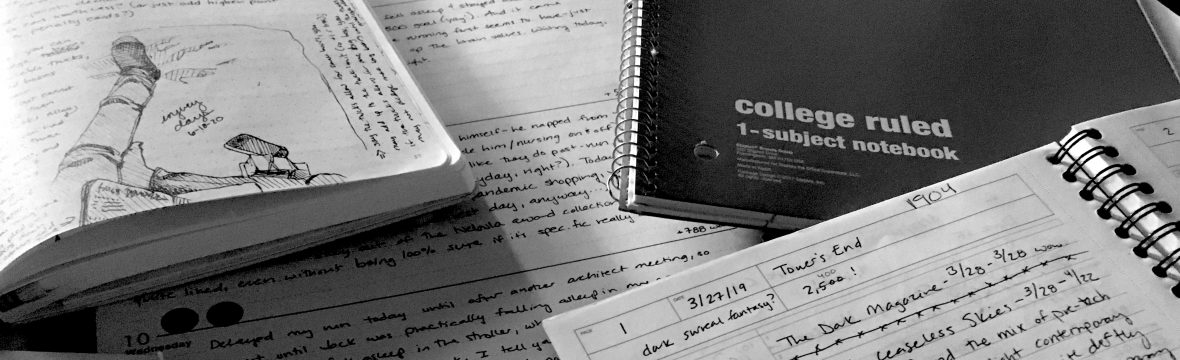
Journal

Dressed to… Well, Not Quite Shoes…

I’m going to try to keep this a bit more up-to-date on a day-by-day basis, if only to encourage myself to pay attention to the individual successes and triumphs of each day. Sometimes, being at home with the kiddo can make all the days blend together, and by the end of the week, I’m often left feeling like I haven’t accomplished or experienced anything. But the truth is, a lot happens and changes on a very small scale during this particularly chaotic time. So as an exercise for myself and my self-awareness, I’m going to try to pay attention to those little things and track them as much as possible, lest by Friday I forget the little wonders each day brings.

Today in Mommy-Land

I woke up today and decided that it was time: I’m going to try to get dressed like a normal person every morning. Now, this may sound at best like a really, reeeeeally silly little goal, and at worst like I’m a total slob most days, but it’s been complicated these past months by the Little Man being a horrendous spitter-upper. It’s only now, at almost eight months, that I can pretty much count on not being thrown up on 3-5 times every single day (and no, that’s not an exaggeration). There comes a point in a parent’s life where you realize that trying to wear clean clothes all the time is a waste of one very precious resource: sanity. And also water and electricity from running the washing machine two or three times a day just to keep myself clothed.

On top of this, I was in almost the best shape of my life prior to pregnancy, which means all of my old clothes aren’t even close to fitting, even having dropped a good deal of the baby weight I put on. Most of my closet consists now of tank-tops in a variety of colors and yoga pants. Considering the rapidity with which all of these got soiled for the past seven months, if I was wearing something mostly clean, I’d sleep in it, and just wear it the next day. Most clothes didn’t make it more than a couple of hours past wake-up time, and I’d end up changing quite regularly.

So today, I got up and put on jeans (maternity jeans still, since I haven’t quite gotten up the nerve to spend our limited cash on a new pair of larger pants, and/or admit that I probably just need to donate my old clothes since it’ll probably be a while ’til I can fit into them again), and an actual tee-shirt, and a sweater. I didn’t put on shoes, because 1) I’m not going anywhere, and 2) I think it’s a silly cultural rule (the “dress to shoes” thing comes from the clever, cleaning guru on the FlyLady website, if you’re wondering), myself preferring not to tread outside dirt all through the house.

It feels like quite an accomplishment, not only on my part to get dressed like a real human being, but also to realize that we’re moving–finally (*sobs with joy*)–out of the spit-up stage. The Little Man can still hork up a bit now and then, but nothing, nothing, nothing like he used to, and that’s a wonderful realization.

He’s also starting waving “goodnight”–not “goodbye” or “hello” yet, just “goodnight”–which is freakin’ adorable.

In Writer-Land

The Little Man took a rare and deeply appreciated two and a half hour nap, which let me get some serious brain-work done. I’ve selected my next story to edit and submit, and while I love it’s core, boy–it’s going to need a lot of work. Mega-rewrite work. I think it’ll be great once that’s done, but it’s going to take some blood, sweat, and tears. Over the weekend, I penciled out the plot fixes, and today I sat down and wrangled out the scene list. It took quite a bit longer than I expected–certain plot elements I’d wanted didn’t meld well with each other, and it took a lot of brain power to figure out what elements were necessary, verses just cool. But I think I’ve got it fixed up now, so hopefully tomorrow–nap permitting–I can get a chunk of new text down following that guideline.

Also heard Friday that a story of mine is on hold at one of my favorite little genre magazines, and am *so psyched* about that! Not holding my breath or anything, but *please please please please puh-leeeeeeeeeeze!* (Fingers crossed.)

In Other News

Not much other news today, other than that it’s snowing again. I think we’re supposed to get 10-14″ last I heard, and it looks like the new snowfall has already made up the melt, so we’re back to where we were after last Wednesday. We also discovered some snow fleas outside the back door, which were pretty interesting to watch! Otherwise, we’ve been watching too many episodes of Hoarders. At least it gets me motivated to clean and tidy up the place! :) That show was our go-to energizer on Sunday afternoons when we had to clean up the apartment, and boy, it can light a fire under us. I think we both recognize that there’s a tiiiiiiny bit of hoarder in us that we just have to keep in check. ^_^

Journal, Misc, Publishing/Editing, Writing

Dr. Eponymous & The Placebo Emporium

LM_InstaPro_Product Photo2It all started with a birthday gift for my little sister back some fifteen-odd years ago. My sister was really into the idea of becoming a vet, so for her birthday, my parents saved up a bunch of old medicine containers and filled them with tic-tacs, Pez, Skittles, and Chiclets to use as “medicine” for when we played vet. It was a great–and rather inexpensive–gift that we enjoyed the heck out of for months, carefully doling out tic-tacs to our stuffed animals (and, of course, eating them ourselves) and writing prescriptions, delighting in “curing” their faux aliments.

The funny thing is that the placebo-effect is actually quite strong. A couple of years ago, my husband (currently finishing up med-school himself) found an article regarding “the placebo-effect” that showed not only that placebos do–in fact–make a measurable, positive impact on people. More surprising than that, however, was the finding that even when you know what you’ve been given is just a placebo, it still creates a placebo-effect. You can take a tic-tac, for example, and say “If I take this, I’ll feel better,” and lo and behold! You just might. Might, of course, is the key word. It’s not actually changing anything in and of itself, but the brain is a powerful (and apparently suggestible) organ.

SocialEase_TPk_ProductImage2 copy
A number of years ago I decided to play with the placebo-effect myself, and used a little antique glass bottle wrapped in a Post-It Note for “Productivity Pills.” I put white Tic-Tacs in it, and whenever I was feeling sluggish, or didn’t want to write, or didn’t want to focus at my day-job, I’d pop a “pill” and get back to work. Did the Tic-Tac actually do anything? No, of course not! Well, it may have made my breath a little minty fresh, but otherwise, no. However, popping one from that silly little bottle reminded me that I was supposed to be focusing on getting stuff done, and I got a LOT of writing and work stuff done during those years. Beyond that, it was just seriously fun and made me smile.

Which got me thinking–what if I could make little snake-oil bottles for all the various “writerly ailments” I suffered from? Things like writer’s block, or self-doubt, or rejection blues? When I really got to thinking about it, there were tons of “ailments,” so I decided to start making those snake-oil “cures” for them under two brands: Lucky Muse and Dr. Eponymous.

DrE_RutRemedy_PourLucky Muse is the snarky, snake-oil, cheater’s brand–the “cures” that promise instant success, brilliant prose, loads of money, and all without really having to work at it, because who wouldn’t love a book deal to fall into their laps? Dr. Eponymous is a bit more serious (though still quite snarky, because–hey, it’s me.) writerly ailments for those committed to improving their craft and surviving the day-to-day pains and aches of being a writer.

I’ve also created a few that are for a general audience, which I had a ton of fun giving as gifts this Christmas.

With a little prodding, I’ve finally opened an Etsy shop (called, what else? The Placebo Emporium!) where I sell some of these silly things, and I must say, I’m having a wonderful time! I’ve got quite a list of new “cures” to get designed and put up there, mostly for my own growing apothecary than anything else! Curious? Check out The Placebo Emporium here! Any particular writerly “cures” you’d like to see? Let me know!

IMG_0840

Journal

A Novel Approach to Novel-Writing and Structure

theweekendnovelistWhen I was in ninth grade, I couldn’t write a five-paragraph essay to save my life. I had good reading comprehension, and understood the material, but for some reason the structure of a five-paragraph critical essay eluded me. I spent hours after school sitting down with my English teacher, trying so hard to understand what I was supposed to do. It was like ramming my head against a wall. No matter how hard I worked, I always ended up with C+, B-, maybe–if I was lucky–B on the top of my graded paper. And I had NO. IDEA. WHY. I swore I was doing what she asked me to do; hell, one time, my mother even sat in with me on one of these tutoring sessions, and even she couldn’t understand what I was supposed to do. 

By tenth grade, I’d pretty much accepted that I was never going to get it, that every paper in my academic career was going to be a flung-to-the-wind Hail Mary attempt for a decent grade. 

Then, I had Mr. Tulloch, and my whole understanding of critical writing changed. For our first big assignment in his writing class in tenth grade, we were going to write an essay on The Heart of Darkness, type it up in proper MLA format, and turn it in. The revolutionary catch? He was going to write the essay. We just had to put it in the right format. And he was going to write the essay in front of us, sentence by sentence, showing us what he was doing and why. He broke down each paragraph and how to structure each piece of our argument (Statement, Quote to Support, Explanation of How Quote Applies–then repeat). He told us how many examples to use, how to place them for greatest efficiency, what each paragraph of the five did what and why it worked best that way. Sentence by sentence, he wrote a critical essay on our book, and piece by piece, until we had an excellent example of what our essays would need to be like. Was it formulaic? Yes. But once I mastered that rigid formula for essay construction, I could experiment, shift the paragraphs, alter the structural flow to best achieve what I wanted to do in any essay. 

Since that day, I never got anything lower than an A- on a paper, and that was a 20-page examination of a book I hadn’t technically read all the way through. The only comment? “Could have gone a little deeper.” Oh yes, yes it could. But the structure was perfect. 

This is the anecdote I thought about while reading The Weekend Novelist by Robert J. Ray. It’s not a book I would have appreciated when I first started trying to write, because I would have chaffed against the step-by-step formula of creating a novel (which is supposed to be ART and UNIQUE). I would have worried that his method would turn me into one of those *horrifying* commercial writers who churn out two books a year and wind up on the New York Best Sellers List because–ugh, who’d want that kind of success? I would have feared that a methodical approach to novelling would kill my creativity and stilt my ideas. 

As a more mature writer, far less afraid of losing whatever little spark it is that makes me want to write, I can only say: I think I’m in love. 

Is Ray’s approach formulaic? Yes. Does it have a use? Absofreakin’lutely. I think this book may have finally taught me plot structure in a way I can wrap my head around. I’ve never been a strong plotter. Intellectually, I understand the whole Aristotle’s Incline, three acts, yadda yadda yadda. But I never GOT IT well enough to know how to apply it to my own work. Or how to dissect other works using it. I’d try, but hit some kind of mental block, and eventually give up, thinking “This structure doesn’t work for me, apparently.”

But that wasn’t it. I just didn’t get it. I read tons of words on plotting and structure, and over and over I read the same examples, the same explanations, and over and over I failed to connect the dots. The common explanations just didn’t click for me. But after reading this book, I feel like I get it for the first time. 

The book is broken down into 52 bite-sized tasks in the effort to construct a whole novel. As of right now, I’m starting to run through it with my own work in progress, and am finding it opening mental doors I didn’t even know were there. Do I agree with every step Ray recommends? Eh, maybe not. But his method has shown me a skeleton to hang my own process on, to make my summary-drafting technique more efficient and fruitful, and how to move forward from that summarizing to full prose. I loved his construction method, even given that I’m not typically a “jump around” kind of writer, leaping from one scene to another. This book provides just the right amount of structure-to-creative leap, in my mind, to both capture the fun of a first draft, and keep that first draft from devolving into a hot mess. 

It’s also shown me how to fix existing manuscripts I have by giving me those structural elements to look for–just as Mr. Tulloch gave me the structural tools to look for in a critical essay. And after mastering the most common plot structure, I imagine I’ll be able to twist things around and adjust them to what I want them to do for any given project, just as I learned to do for essays. 

I thoroughly enjoyed this book, and if you’re struggling with plot and the common ways of explaining structure haven’t helped, this might be the book for you. 

(This was one of the five books recommended by Peter M. Ball in his post about narrative structure.)

Journal, Publishing/Editing, Writing

When Do You Know a Story is Dead?

trashed_pagesI have this story. I’ve been rewriting it from scratch since last February. From scratch. I think I’ve come close to four or five total drafts of this story.

I’ve changed POV. I’ve tried different tenses. I’ve added characters. I’ve altered the plot in major ways. I’ve started it in different places, hoping to find something more effective.

I love the core idea, but it’s Just. Not. Working. And I have no idea why, which is the most frustrating part. I’m beginning to get the feeling that it’s me–that I’m lacking some specific tool set to help me overcome the invisible wall that continues to block this story. It’s not that I can’t get a rough draft. I’ve written several at this stage, but each one has major problems I can *feel* in a vague, intuitive way without being able to specifically identify them.

I’ve talked before about the stages of mastery, and right now I’m sunk deep in that second, infuriating stage: Conscious Incompetence. I know it’s not working. I know I need to do something to fix it. But I’m at a complete loss to identify why it’s failing so badly.

whynowork

Rawr.

So how do you know when it’s time to give up on a story? How do you know when the sheer amount of time put into a story surpasses the worth of the output? Chances are, it may take a while before I figure out what I’m doing so wrong on this one. I suspect it has something to do with the plot arch, but I have no idea how to make it better. It could also have to do with the dynamic of the two primary characters, and the complicated backstories for both. I at least managed to introduce a stronger speculative element in the last reworking, so that should make it more marketable once I can fix the rest of it, but everything else is such a tremendous mess, I’m not even sure where the path to the correct version begins. Each time I think I’ve got it, it implodes again.

I stall out in situations like this because I really believe in the mantra “Finish one thing before starting another,” particularly in application to writing fiction (and when creative time is so limited). It’s too easy to start a dozen projects and never get around to finishing any of them. But this seems like an exception to the rule. If you’ve worked and worked and worked at a piece, and it’s simply NOT WORKING, and no amount of forcing oneself to finish yet another draft is going to fix the issue without a major epiphany, is it better to soldier on or cut the failing story loose so you can hopefully move on to another project (and perhaps someday in the future, figure out what’s really wrong with this one)?

The Catch-22 of this situation is the author’s self-perception. Is the story *actually* failing as badly as I feel it is? Or am I being hypercritical? If it’s me being hypercritical, what’s to stop me from hitting this wall on every story I get down?

My only consolation is that I *don’t* hit this wall on every story. I’ve had plenty of stories that I had to work on a while until I was happy with them, as well as the rare (but lovely) scenario when a story has practically written itself. I only occasionally hit a wall like this that simply won’t go away.

mulder_writing_gif

At first, I thought I’d re-read it again, see if some forward momentum could get me through this current draft, but then I started thinking about it. Even if I finish this rough draft (which I would have to force, at this point, because it’s got a major logic fault-line through the center of it which I still don’t know how to fix with editing), it’s just another in a long line of failed rewrites. Maybe this isn’t a story I’m capable of telling at this point. Maybe I’m not quite ready. It doesn’t mean I won’t be able to fix it someday in the future, if the solution presents itself, but I have a feeling that there are some fundamental things I need to learn first. Hopefully, once I learn them, I’ll be able to resurrect this story.

Until then, I’m going to call it: Time of death is 10:21AM.

Journal, Writing

#writingaffair #babymuse

Writing With BabyAfter three weeks of getting (a little) used to having the Little Guy around, I think we’re finally settling into…well, not quite a routine (that’s a big and impressive word for the helter-skelter of our day-to-day at this point), but at least a better comfort zone. In fact, in the last three days, I’ve even gotten some writing done. WHAT?! That’s right. I got words on the page with a three week old within ten feet of me.

Now, to be fair, I didn’t get a *lot* of words, but still managed a couple of paragraphs before the mini-session of peace came to an abrupt (and usually messy/spit-upy/poopy) end, but it’s something! And I’m loving it. I feel so devious squeaking a paragraph or two in while I stuff food in my mouth because the Little Guy’s dozed off for a few minutes. Or like now: stealing a moment to blog after he crashes out on my lap post-feeding. It’s…delicious. Maybe all the more so because he could literally wake up at any moment, and then all will be finished until maybe (*MAYBE*) after the next feeding if he decides to conk out, which isn’t a guarantee.

Still, it’s so delightful to steal a few moments to write. And the ideas–oh, the ideas!–are just flowing in. There are so many things I want to work on, so many things I want to write~! But there’s no time for splitting attention. If I’ve got five, ten, twenty, or (Hallelujah!) thirty minutes–which I have no idea of knowing how long each session will be–I only have time for one thing, and I have to know what that is before I get the chance to open my computer and type. No time for excuses, no time for debating projects, no time to waste: it’s now, or probably not again for the rest of the day. It completely eliminates resistance to getting my butt in the chair, because if I hesitate, the moment might slip away.

So here’s to babies and making a few minutes of writing feel like a day’s worth of productivity!

And with that, he’s stirring and I must go for now. :)

Journal, Pictures, Writing

Brief Post-Baby Post

Ryan_01Well, it’s official! I’m a mom. The Little Guy arrived a week and a day early (today was his due date, actually), and since then it’s been a whirlwind of getting accustomed to the new structure of life. Writing wise, haven’t done much of anything, which I’m fine with given the circumstances. I keep meaning to update my journal with all the details of the last week, but that hasn’t quite happened yet. Did manage to resubmit “Swallow,” having received a rejection three days after returning home from the hospital. But the Little Guy seems to take the sting out of the form-letter “no,” and the story’s back out in the world.

I’m glad I got at least two short stories wrapped up and doing their rounds before he got here, if only because resubmitting is pretty easy when you already have an itinerary of markets sorted out. It’s almost point-and-click, really. Even so, it can be a challenge to find that little bit of time between naps and feedings. Still, I’m actually kind of enjoying the time crunch. It keeps me from procrastinating too much, because really–I may only have twenty minutes to a couple of hours to get things done. There’s no time to dawdle (though often productivity stuff is pushed off in favor of getting some much needed shut-eye of my own!).

I suspect as the weeks go on, we’ll get into a more predictable routine, but until then, it’s all hands on deck and a whole lot of snuggling and cuddling with the Little Guy. ^_^

Journal

Creative Play, or: Letting Your Inner Child Run Rampant

ImageA long, long time ago I wrote a blog post for Apex Magazine about creative play. It’s long gone now, after several much-needed and very successful website overhauls, and if the original version is on this computer, I’ll be dashed if I can find it. (Welcome to the modern world of data-hoarding and the joys of “What did I title that document again?”) But I wanted to discuss it again, because recently, I’ve started exploring what creative play means in a writing setting.

Let me begin with a bit of a flash-back: In “The Good Old Days” when I was in sixth and seventh grade, I could write for hours. Literally, hours. My standing record was seven hours straight one Saturday without stopping for sustenance or probably even to pee. I remember that day only in hazy memory, gilded at its fuzzy edges by the sparkling fairy dust of childhood-remembered, and the whisper of urgent creativity: what happens next? I didn’t want to play outside. I didn’t want to read. I didn’t want to watch TV (which, if you know me and my self-admitted addiction to television, is the biggest shocker of all). I wanted to write, because writing at that time was more than just putting words on the page. It was living story. It was all-consuming. I wasn’t writing at all, but playing make-believe in Times New Roman. It was free and it was fun as hell.

Was the writing good? Hell no. Some of those old 100-page novels make me wince in stylistic agony when I re-read them these days, but I can’t deny they were bliss to write. Even now, I consider those heady days as some of the best of my writing life. I was so absorbed by the stories I was telling, I couldn’t hardly think about anything else.

In high school, and particularly in freshman/sophomore year of college, I decided to get serious about pursuing writing as a career. Continue reading “Creative Play, or: Letting Your Inner Child Run Rampant” →

Journal

April Doldrums

And just when the energy felt like it was surging back, the April Doldrums arrive to stunt everything. It’s something about this week, man–something I just can’t pin down. Maybe it was the long weekend. Maybe it was the two fleetingly beautiful 70 degree days, followed by clouds and rain and blah. <–That sounds likely, actually. 

It’s not that I haven’t gotten some things done. I did get the revised short story “Swallow” out again to the next market, and I *do* think the opening is better, so that’s something. And I *did* get my hour of writing work in today, and started Midnight Robber by Nalo Hopkinson, which has been on my to-read list since I attended a reading of hers at the University of Hawaii at Manoa back oh so long ago. (It’s delightful so far, thanks for asking.) 

Preggo-wise, things are going generally well. Had a check-up ultrasound last week due to a minor concern, but the baby’s doing good and is just the right size for what he should be at this point. Still, he moves and pushes out so much, I’m starting to wonder if you can develop claustrophobia in the womb. lol That all said, with the belly getting bigger and pushing up on the stomach comes heartburn, which has been just freakin’ delightful the past two days. Tums helps, and I’ve got some stronger stuff the doctor recommended if need be, but blech. 

Motivation to do anything at all is supremely low at the moment. I tricked myself into editing the latest short story, “The Mortal Coil,” for an hour by setting a 10 minute alarm on my phone (with the assumption that maybe by the time I hit 10 minutes, I could carry on with my natural tendency to want to finish specific tasks). It worked (thank goodness!), and I got some work done, but this run-through of editing has been much gentler than the run-through for “Swallow,” and I’m still not sure if that’s a good thing or not. I ended up cutting out 1700 words from “Swallow” over the editing process, but so far on this one, I’ve been much more lenient, and only cut out about 500. Still, I’m not totally convinced that this particular story needs as much cut out (it’s starting almost 2000 words shorter than “Swallow” initially was), and it feels rather whole in and of itself. 

I also realize that I write a lot of quiet, thoughtful stories that aren’t particularly action-y. Not sure if that’s a good thing or a bad thing in terms of possibility for sales, but I enjoy it, so I suppose that’s what matters. :) 

Wall-staring time! *stares blankly*

Journal

Hurts So Good: Back On the Horse Again

This last week, I got my first rejection in too many months, and I gotta say–despite the initial twinge of “awww…”–it’s a great feeling. I’d forgotten how awesome it feels to submit short fiction to the elusive and exclusive fiction magazine markets. Even rejection, to some degree, feel fantastic, if only because it’s sure and quantifiable proof that I’m out there and trying again. 

My submission last week was a bit of a long-shot, but I’ve gotten some nice rejections from them in the past, so there was still a teeny little part of me that was hoping for a pleasant surprise. Waking up to a rejection ain’t much fun. Thankfully, the pinprick of disappointment passed quickly (though that said, there’s still some small part of me that cringes at the under 24 hour turn-around time). Ah, the miracles of e-submission. It’s a cruelly efficient beast. 

But one good thing (pseudo good, I suppose), is that the swiftness of the response highlighted for the writer-side of me something the editor-side had been quietly nudging about for the past few weeks. The first paragraph needs to be snappier. I love this story so much, and I really, truly believe in it, but it’s never going to sell if that opening paragraph doesn’t hook the casual reader enough to *get* to the good stuff later. I know this from my own time slushing: it’s gotta grab, and it’s gotta grab fast. 

The current opening is solid. It’s well-crafted, I’ve minded my p’s and q’s, it effectively introduces the central character and the narrator, plus hints at the coming conflict. But, like Ferrett Stienmetz says in his interview with Apex, if I’m being honest, I know that opening is only “good enough.” It’s functional. It’s maybe even a bit graceful. But it’s not as powerful as it could be, and my editor-side has known this for a good few weeks. My writer-side, on the other hand, has been griping about having to re-examine a piece that–for almost all intents and purposes–is (in the words of Katherine Hepburn) already yar. To mess with it any more seems sacrilegious, especially when there are other editing projects to move onto and clamoring for attention. 

“But…” says my inner-editor. “But…”

And the thing is, my inner-writer knows the editor is right.

“!@#^@#%$!%&…” says my inner-writer. 

So tomorrow, I’ll put my head back to the grind-stone and hopefully, *hopefully* this fix won’t be too tough. It’s gotta be done, though, and there’s no time like, well, tomorrow. ^_^ 

Onward and upward!

Journal, Publishing/Editing, Writing

Lessons Learned from Z: A Novel of Zelda Fitzgerald

Z_coverI picked up Z: A Novel of Zelda Fitzgerald at Logan Airport an hour before my folks and I flew off to Long Beach, CA. I was originally looking to pick up a copy of Boy, Snow, Bird by Helen Oyeyemi, but they didn’t have copies yet. I’ll have to track that down… But Z had been on my to-read list since I saw it recommended in the New York Times Book Review.

Let’s lay it out plain: I’ve read The Great Gatsby a couple of times, but not since high school, and while I enjoyed the book, it didn’t permanently imprint itself on my adolescent soul. I knew Fitzgerald was something of a struggling artist, in that while he hit upon some great fame in his time, Gatsby wasn’t received as well as he’d hoped, and I vaguely remembered that he’d also had something of a drinking problem. I knew he and his wife, Zelda, had a tumultuous relationship. But that’s pretty much the entirety of my knowledge of the Fitzgeralds.

I picked up this book looking to find a relaxing beach read, something I could jump in and out of with ease, preferably before bed, all the while checking a to-read book off my list. What I got instead, was a thrill-ride, a few bouts of yelling at characters, and some insight into the triumphs and pitfalls of writing life.

This is a fictionalized version of Zelda and Scott Fitzgerald’s lives together, but Therese Anne Fowler made it so real. The characters are both deeply flawed, but also deeply admirable even as they succumb to their various pitfalls. Scott’s alcoholism, procrastination, control issues, and immutable self-doubt makes you both want to hug him and choke him simultaneously. Zelda’s crumbling sanity, her entrapment in a world not yet ready for women’s total independence from their husbands, and her thwarted ambitions (less from her own production than from the interference of those who “know best”), is soul-crushing and sublime. There were chapters where I was ready to jump into the pages and sucker-punch Scott. There were chapters where I just leaned back and thought, “To hell with it: destroy yourselves. See how that works out for you.”

The glimpses of other celebrities from the time, too, adds to the realization of how small the publishing world really was back in those days, and in some ways, still is today. Sure, there are a lot more authors trying to make their waves in the oceans of publication, but when I go to conventions, I almost always run into people I know, or people who know the people I know. Connections are everywhere, as they were even back in the 1920s. Generations of writers who mature and begin publishing around the same times grow up into these cliques of “famous people who knew each other” (C.S. Lewis and Tolkien hung out?! WHAT?!) as if their talent magically brought them together, when really they’ve all just been struggling at the craft together, sometimes for years.

Anyway, that’s the general gist of the story. What struck me, really, was the way Fowler demonstrated Scott’s creative challenges: the procrastination, the partying and alcoholism, the deep desire to aid new writers while neglecting his own work, the poor reviews or lackluster sales, the ego (and immolating self-doubt), and the anguish all of those caused him. In my mind, I guess I’d always imagined Fitzgerald as this chill, hip writer in Hollywood with a bunch of short stories and novels under his belt, despite being a bit of a party hound. This version of his life showed a far more conflicted individual, wrought with the same crippling self-doubt I see both in myself and in so many writers I’ve encountered. I see the urge to skip out on writing for the day, the excuses, and the anguish that follows weeks, months, and years of not producing, which can so easily wear us down. I see, too, that necessary ego–the voice that pushes you on, tells you “you’ve got this,” that you just might be one of the few who “makes it,” maybe even does better than just “making it,” and pushes right on to being considered one of those “famous people who knew each other.”

This novel portrays a Scott that is anxious, dogged, indebted, and his own worst critic. It shows him as a man of great ambition and a great many personal hurdles to overcome. He wants so badly to be considered great, wants so much to find the validation that his work means something, that his name will linger through the centuries among the best of the best. He wants it so much, it actually hurts to read about it at times, because who hasn’t felt that way, at least occasionally? But his own ambition and sense of ineptitude eat him alive.

Simultaneously, Zelda’s story is one I thankfully don’t have much personal experience with. When my husband came to join us over the weekend in Long Beach for my sister’s wedding, I probably hugged him a little extra tight, because I was just so damned grateful that he’s so supportive and loving. No one would argue Zelda and Scott didn’t have a passionate romance, or even that they didn’t love each other right to the end, but it was a tough era for being a married woman with her own ambitions and hopes and dreams. I remember reading The Feminine Mystique a few years ago, and Betty Friedan’s description of what psychologists in the 1950s called “housewife syndrome” felt oh so familiar when reading about the frustrations Zelda encountered. Publishing under her husband’s name because it would make more money, but then having that accomplishment treated as if it were only because of his name that the stories were worth anything; her painting exhibit titled in reviews as “a wife’s artwork”; or her obsessive bid to be a professional ballerina because it was the only thing that made her feel worthwhile being thwarted by assertions from her husband and doctors that she should find all her contentment and happiness in the home, being a wife and mother (even though they had a nanny who took care of their daughter, and Scott was out and/or drunk a good chunk of the time)–it was exhausting and heartbreaking to read. Ladies, we’ve come a long way.

This is a great book, and I do think aspiring writers ought to check it out, if only to see what early fame and too much self-doubt can do to someone in this career. It’s not a relaxing read. From their whirlwind courtship to the New York parties, to Paris and the fighting and mutual destruction, it’ll keep you on your toes. But it also made me want to write. I finished this book and felt like I had a year’s worth of creative energy backlogged inside me. I couldn’t wait to get home and dive in, get things out there, get working. There are a few other things that I think contributed to this, not the least of which is the impending June deadline for the Little Guy, but I’ve been raring to go ever since, and these last two weeks have been more productive than the last couple of months combined.

Maybe a bit of the Roaring 20’s rubbed off on me, too.